

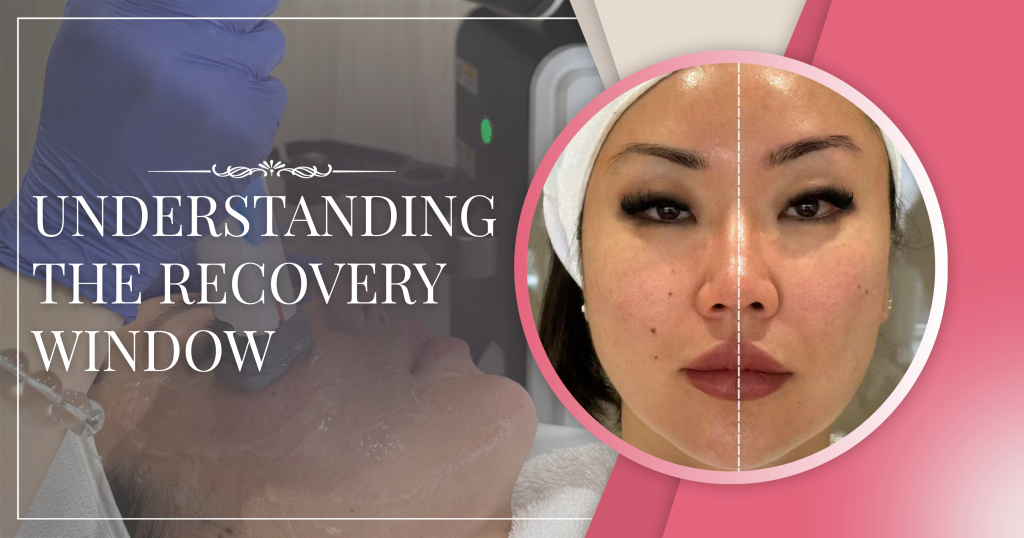
One of the greatest advantages of modern clinical aesthetics is the ability to refresh your appearance without the extensive downtime associated with surgical procedures. However, choosing a non-invasive path doesn’t mean your skin doesn’t need time to heal.
Whether you are looking to smooth fine lines, restore lost volume, or refine your skin texture, your body requires a brief window to repair and rebuild on a cellular level.
Because everyone’s skin sensitivity and healing speeds vary, your non-surgical treatment recovery timeline depends entirely on the depth of the treatment. Here is an honest, question-based guide answering exactly what to expect after your session.
To help you plan your social and professional schedule, non-surgical modalities are generally grouped into three main recovery categories:
Zero to Minimal Downtime (0–24 Hours): Surface-level modalities, such as a Bela MD medical facial or a Jetpeel, typically involve minimal to no downtime. There is a common misconception that deeper treatments always require a longer recovery, but this is not the case. Advanced technologies like Ultherapy and Thermage FLX are designed to deliver energy to targeted foundational layers, leaving the skin’s surface completely intact and wound-free, which allows for zero social downtime.
Mild Downtime (2–4 Days): This applies to deeper skin-refining or energy-based treatments like Microneedling or mesotherapy. You will likely experience mild redness, a sensation similar to a light sunburn, and slight tightness as the skin begins its natural renewal process.
Moderate Downtime (5–7 Days): More intense structural treatments or deep resurfacing lasers fall into this category. You may experience minor swelling, pinpoint bruising, or noticeable peeling as old skin cells shed to reveal a refreshed surface.
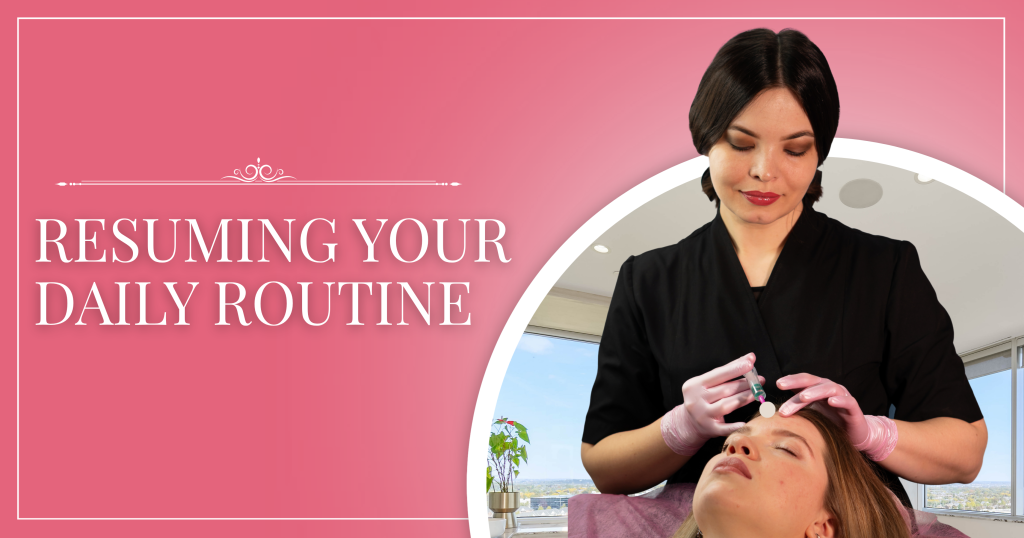
Cosmetic injections, including dermal fillers and neuromodulators administered by experienced doctors and nurse injectors , bypass the outer layers of the skin to target structural layers underneath.
To ensure a smooth recovery and protect your investment, the first 24 to 48 hours post-treatment are critical. During this window, your skin’s protective barrier is temporarily vulnerable.

As a rule of thumb, you should wait at least 24 hours before applying traditional liquid foundations or powders.
Treatments like microneedling create thousands of microscopic pathways in the skin. Applying makeup too early can trap artificial pigments and oils inside these clean channels, leading to irritation or breakouts. If you absolutely must cover residual redness the next day, our clinical team recommends using a clean, breathable, medical-grade mineral makeup that actively supports skin recovery.
It is incredibly common for your skin to feel like a tight drum or look slightly flaky a few days after an advanced facial treatment.
This is actually a positive sign that your non-surgical treatment recovery is working exactly as intended. When devices stimulate deep cellular turnover, old and damaged skin cells dry up and rise to the surface so that fresh, healthy tissue can take their place. During this phase, your skin’s temporary moisture barrier is lowered, which causes moisture to evaporate more quickly. Keeping your skin drenched in a clinical-grade hyaluronic acid or lipid-replenishing cream will ease this tightness instantly.
Direct sun exposure is the absolute number one enemy of recovering skin cells.
Because non-surgical treatments remove old cells or create micro-channels to stimulate healing, your fresh skin is highly vulnerable to UV rays. Exposing treated skin to the sun without protection can cause a condition called post-inflammatory hyperpigmentation (PIH), leading to dark spots and undoing the benefits of your treatment. We strictly advise avoiding direct sun exposure for at least 7 to 14 days post-treatment, and applying an SPF every morning and reapplying it every 2-3 hours is mandatory.
While you cannot force your biology to skip the natural healing phases, you can optimize your environment to help your body repair as efficiently as possible.
The best way to support your skin is from the inside out: stay exceptionally hydrated by drinking plenty of water, eat nutrient-dense foods rich in vitamin C to aid tissue synthesis, and sleep with your head slightly elevated on an extra pillow for the first two nights to help naturally drain any temporary swelling. Lastly, always strictly adhere to the customized post-care topical regimen provided to you by your Rejuuv practitioner.

At Rejuuv Medi Spa, your safety and comfort are our absolute priorities. We never leave you guessing about your post-care steps. After every single treatment, our team provides you with a detailed, step-by-step recovery plan tailored precisely to your skin profile and the specific technology used.
If you want to refresh your look but need a treatment plan that perfectly aligns with your upcoming business trips or social calendar, we are here to map out the perfect timeline for you.
Visit us at any of our three beautiful Greater Toronto Area locations: